Click image for HiRes
Abstract
As global demand for both food and clean energy continues to grow, competition for land is becoming an increasingly urgent challenge. In particular, the rapid expansion of ground-mounted solar photovoltaic systems has intensified pressure on agricultural land. Agrivoltaic systems offer a promising solution by enabling the simultaneous production of food and electricity on the same land. Beyond improving land-use efficiency, agrivoltaic systems have the potential to create more favorable microclimates, reduce crop heat and water stress, and strengthen energy resilience.
Driven by the need to rapidly expand renewable energy capacity without compromising food production, agrivoltaic deployment has accelerated dramatically in recent years. Installed agrivoltaic capacity in Europe alone exceeded 15 GWp by 2025, compared with approximately 14 GWp worldwide in 2021.
This seminar will provide an overview of agrivoltaics, highlighting its many opportunities as well as its current limitations and trade-offs. It will explore why continued research is essential and present emerging research directions, including novel spectrally selective approaches that exploit the differing spectral responses of plants and solar cells to optimize the performance of both crops and photovoltaic systems.
Finally, the seminar will present insights from first-hand agrivoltaics research conducted in Sweden under a high-latitude northern temperate climate. The discussion will consider which findings may be transferable to contrasting environments, such as Australia's climate, and where site-specific adaptation is required.
Click here to see all available video seminars.
Click here to go to the SPREE HOMEPAGE.
Brief Bio
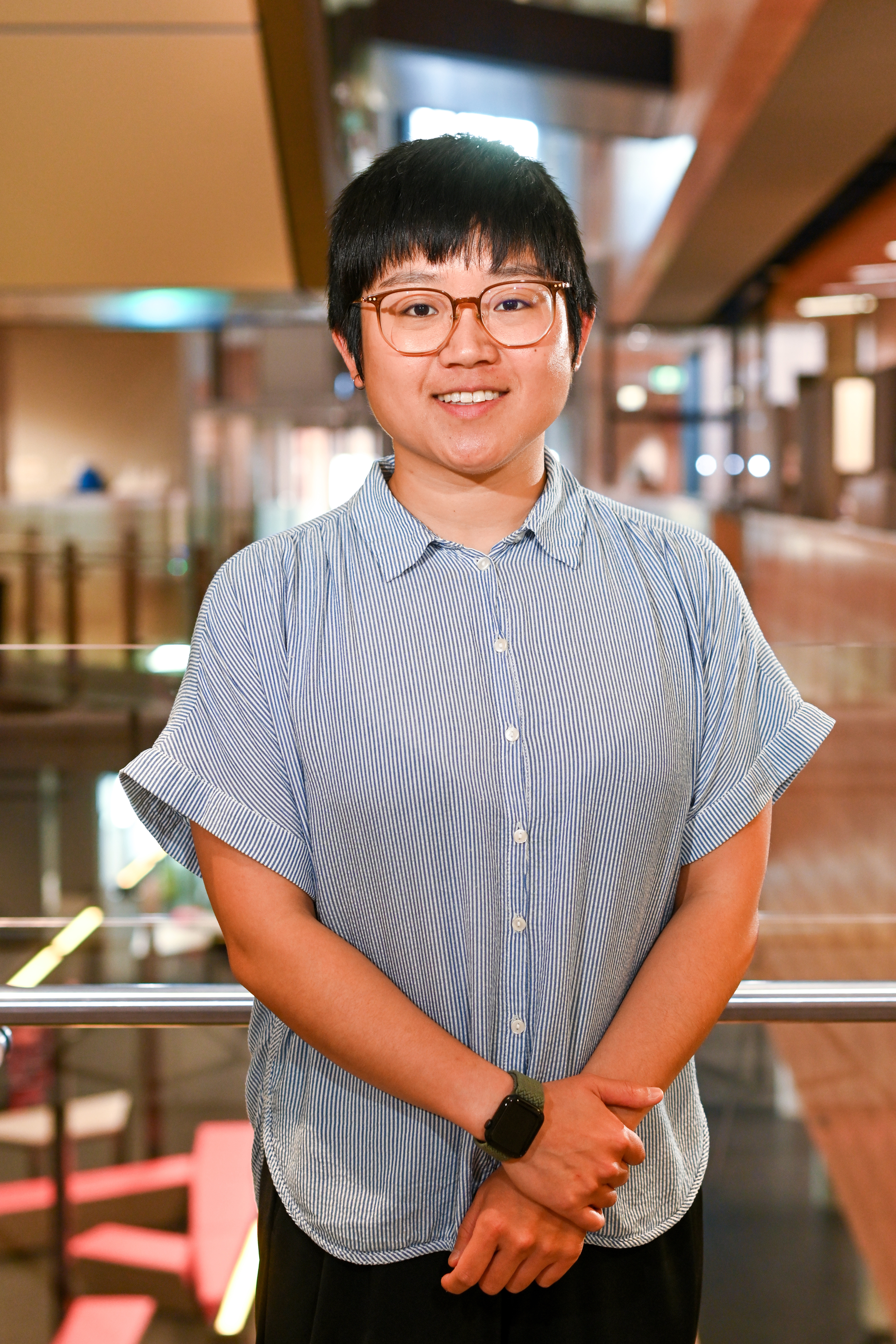
Dr. Silvia Ma Lu holds a Bachelor’s degree in Industrial Technology Engineering from the Polytechnic University of Catalonia and a joint Master’s degree in Renewable Energy, specializing in solar energy, completed through the KTH Royal Institute of Technology in Sweden and École Polytechnique in France.
She recently completed her PhD in Energy and Environmental Engineering at Mälardalen University, Sweden. Her doctoral research focused on agrivoltaics, combining modelling and experimental approaches to investigate solar irradiance, both the quantity and spectral quality of light, and its effects on photovoltaic system performance and crop production. During August and early September, Dr. Ma Lu is a visiting academic at UNSW through the Diversifying Visitors to UNSW Engineering Scheme 2026, hosted by Dr. Gaia Maria Nolasco Javier (SPREE). Her visit aims to foster collaboration, facilitate knowledge exchange, and strengthen research capacity in the rapidly evolving field of agrivoltaics.
