Click image for HiRes
Abstract
Partial shading is often represented as a uniform loss factor in utility-scale PV yield modelling. While this approach has generally been adequate for conventional front-contact cell architectures, the increasing adoption of back-contact (BC) technologies introduces different electrical responses that may not be fully captured by traditional assumptions.
This presentation compares the behaviour of front-contact and BC cell architectures under partial shading using diode I–V analysis. It demonstrates how front-contact cells experience localised reverse-bias conduction, whereas BC cells exhibit a more distributed electrical response, enabling improved energy extraction ('anti-shade') and reduced hotspot risk ('anti-hotspot').
The discussion links module-level observations to system-level modelling considerations, highlighting the importance of physics-informed approaches to shading analysis and reliability assessment in modern PV systems.
Click here to see all available video seminars.
Click here to go to the SPREE HOMEPAGE.
Brief Bio
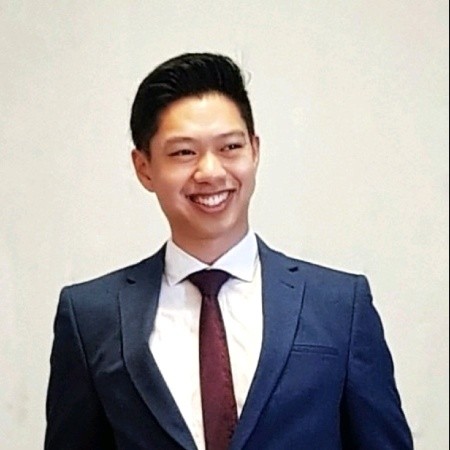
Sang Bui is a Senior Solutions Manager at LONGi Solar Australia, specialising in the application of photovoltaic device physics to real-world solar project decision-making.
A graduate of the University of New South Wales (UNSW), Sang has worked across the Australian solar industry since 2011, with experience spanning government, project development, and solar manufacturing. Having contributed through multiple stages of industry evolution—from early module quality challenges to the adoption of advanced cell architectures—he now supports developers in assessing the system-level value of emerging technologies.
His work focuses on LCOE-based decision frameworks, particularly on how back-contact (BC) technologies influence energy yield assumptions and long-term system reliability.
