Click image for HiRes
Abstract
There has been substantial interest in semiconductors based on heavy pnictogen cations, such as Sb or Bi, because of their potential to replicate the exceptional optoelectronic properties of lead-halide perovskites, while overcoming their stability and toxicity limitations [1]. These are referred to as ns2 materials because of the important role of the stable valence s2 electrons in enabling defect tolerance [1]. In this talk, I will discuss the evolution of our understanding of the factors enabling defect tolerance, and promising Bi- and Sb-based materials that have emerged. I will also discuss the potential of using AI to accelerate the optimisation of these emerging materials, particularly the optimisation of film morphology [2], which is often challenging and time-consuming. Finally, I will discuss the case of BiOI, and our development of this material into stable oxide-based photoelectrochemical tandems for bias-free CO2 reduction [3].
[1] Mosquera-Loi, .., Walsh,* Hoye,* Nat. Rev. Chem., 9, 287 – 304 (2025)
[2] Nandishwara, …, Hoye,* Sun,* npj Comput. Mater., 11, 210 (2025)
[3] Andrei, Jagt, …, Hoye,* Reisner,* Nat. Mater., 21, 864 (2022)
Click here to see all available video seminars.
Click here to go to the SPREE HOMEPAGE.
Brief Bio
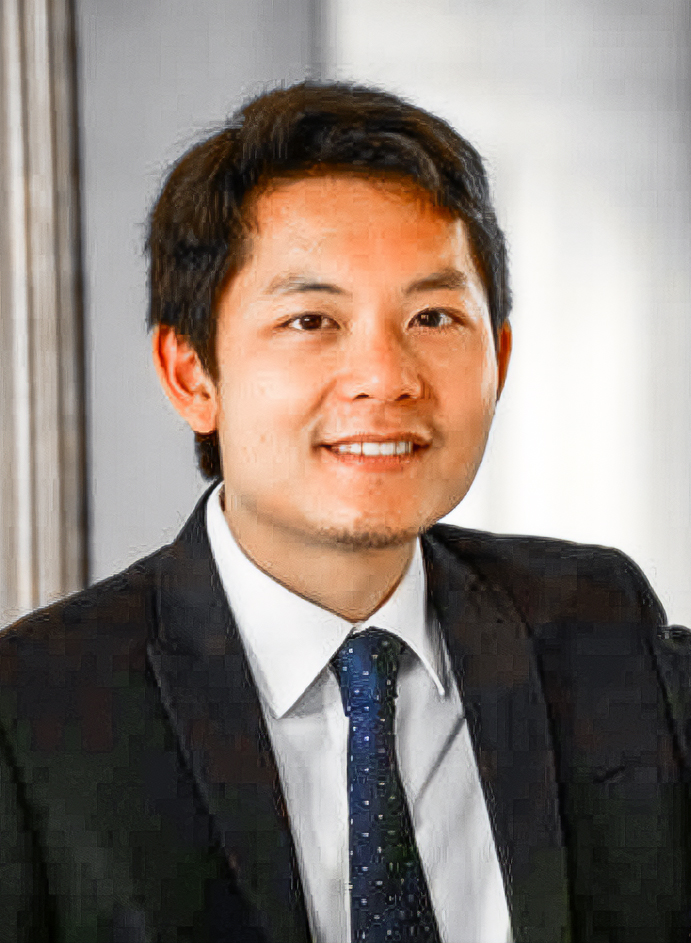
Robert Hoye is Professor of Materials Chemistry and Royal Academy of Engineering Research Chair at the University of Oxford, where he is also a Fellow of St. John’s College. Prof. Hoye completed his PhD at the University of Cambridge (2012-2014), followed by a postdoc at MIT (2015-2016), before returning to the University of Cambridge as a College Research Fellow (2016-2019). In 2020, he moved to Imperial College London as a Lecturer, then Senior Lecturer (Aug. 2022 -). In Oct. 2022, he moved to Oxford as Associate Professor, and was promoted to full Professor in 2026. Prof. Hoye’s group focuses on developing inorganic semiconductors for energy applications, including metal-halide perovskite nanocrystals, and discovery of lead-free perovskite-inspired materials. His group’s research spans from fundamentals (including spectroscopy and computations) to materials synthesis and applications in photovoltaics, light-emitting diodes and detectors.
Prof. Hoye was awarded the 2026 EU-40 Prize from the E-MRS, and the 2024 RSC Beilby Medal and Prize from the RSC. He is CTO of NanoPrint Innovations Ltd..
