Click image for HiRes
Abstract
As the global energy transition accelerates, its biophysical limitations are becoming increasingly important. Decarbonising the power systems require substantial upfront investments of energy and materials to build new generation, storage, transmission, and power-to-X infrastructure. This raises a fundamental question: can the energy system deliver sufficient energy to society while simultaneously investing enough energy to transform itself?
In this presentation, I explore whether the accelerating energy transition could give rise to an energy cannibalism challenge, whereby an increasing share of society's available energy must be reinvested in building the infrastructure required for the transition. Drawing on the newly introduced concept of systemwide energy return on investment (EROI), the presentation brings together three studies examining how the biophysical performance of future power systems is shaped by the pace and design of the transition, technology choices, spatial representation, and the uneven distribution of renewable energy resources. This also raises questions about a potential new form of resource dependence in the energy transition: although renewable energy resources are widely available, their uneven geographical distribution can create new dependencies and substantial infrastructure requirements.
Across the LUT Best Policy Scenario (LUT-BPS), the Teske/DLR scenarios, and the IEA scenarios, the results show that a transition towards highly renewable energy systems does not necessarily lead to an unsustainable decline in net energy performance. Despite the substantial energy investments required to build the new energy infrastructure, systemwide EROI remains above the threshold considered necessary to sustain a complex society. However, the results also show that EROI trends are strongly influenced by system design, technology choices, spatial representation, interconnection, and the geographical distribution of renewable resources. By moving beyond the performance of individual technologies, the systemwide EROI framework provides a biophysical perspective on the energy transition: not simply whether future energy systems can be decarbonised at lowest cost, but whether they can generate sufficient net energy to sustain society while simultaneously building the infrastructure required to transform themselves.
Click here to see all available video seminars.
Click here to go to the SPREE HOMEPAGE.
Brief Bio
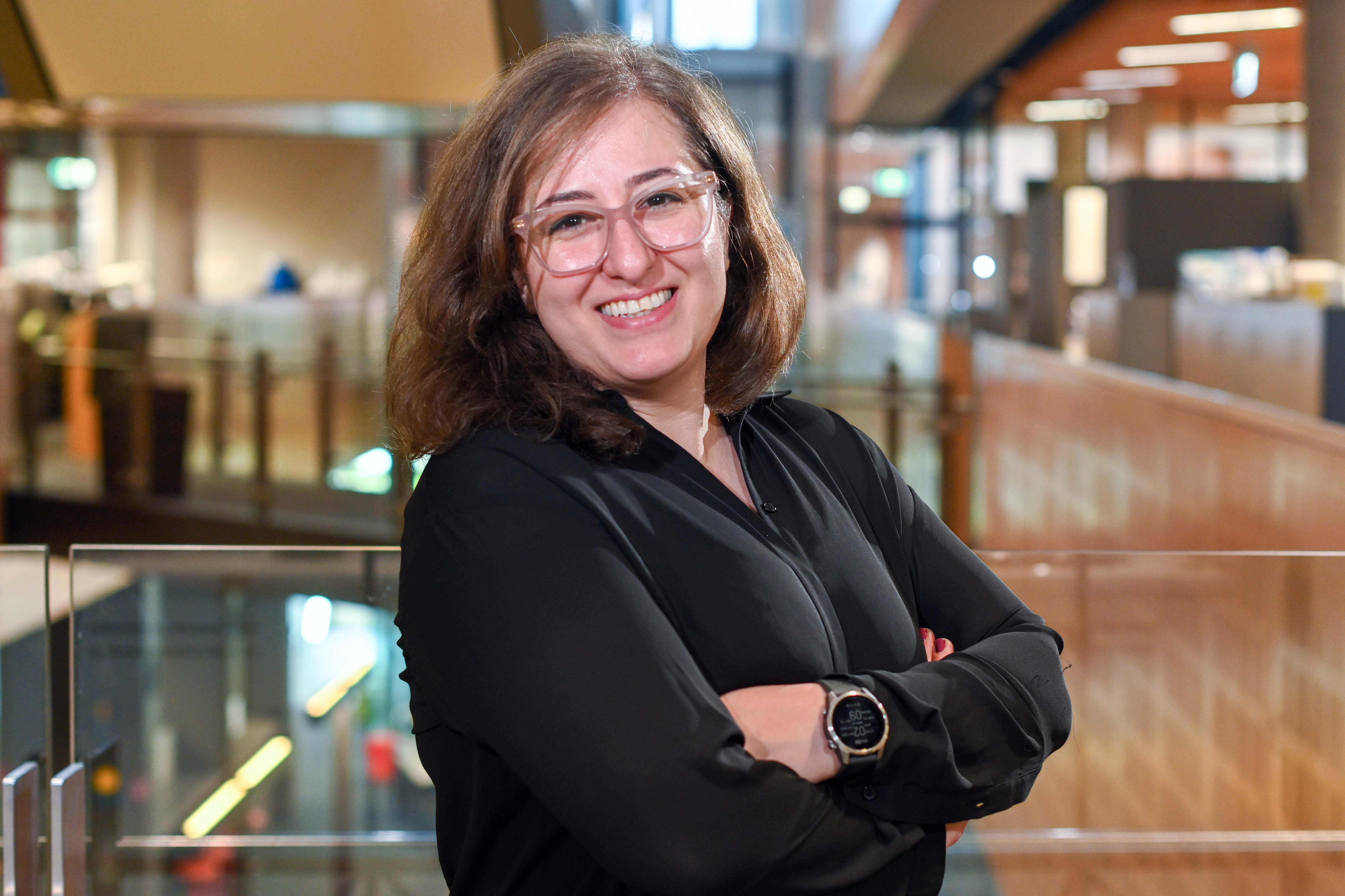
Dr. Hasret Sahin is postdoctoral research at the Solar Economy team of LUT University in Finland. She earned her MSc. in Earth Systems Science from Middle East Technical University and a PhD in Energy Systems Engineering from Gazi University in Türkiye. She has over ten years of professional experience spanning academia, energy and environmental consultancy, and the private sector. She has contributed to international environmental projects in the areas of energy, agricultural value chains, climate adaptation, water, and land management. Her experience also covers renewable energy systems, industrial decarbonisation, and environmental sustainability. Her current research at LUT University focuses on assessing the environmental and biophysical dimensions and limitations of future energy transitions by combining energy system modelling with prospective LCA. Her research addresses systemwide energy return on investment (EROI), critical raw materials (CRM), criticality and circularity metrics (CROI), Power-to-X systems, and the environmental implications of emerging technologies and their integration into future energy systems.
